
Arrest Warrants in Upshur County
Texas law sets the frame. Code of Criminal Procedure Article 15.01 defines an arrest warrant as a written order from a magistrate, directed to a peace officer or another named person. Article 15.02 lists the requisites. The document must name a known person or give a reasonably definite description, state the offense, and carry the magistrate's signature and office. A warrant is a court instrument. It is not merely a Sheriff's database entry. In Upshur County, the path usually runs from a complaint or affidavit through judicial review to a signed order. The county publishes no internal submission steps or local warrant-number pattern. So use the court and agency named in the actual record. Never assume one public workflow fits every case.
Upshur County Arrest Warrants Begin With Magistrate Review
Chapter 15 gives a magistrate options. The court can issue a warrant or, where authorized, a summons. A summons tells a person to appear. No officer makes an arrest on one. Procedures vary with the charge and the legal record before the court. A filed case does not mean a warrant exists. Neither does an officer's phone call or visit. For a public record question in Upshur County, identify the case and ask the clerk which document is available. The county has no public countywide repository of pending arrest warrants. Nor is there a local bond schedule that covers all cases.
What an Upshur County Arrest Warrant Contains
The statute sets minimum requisites. An actual Upshur County warrant may carry more case detail. The county publishes no universal form or number format, and the sample here describes fields to request, not a copied record or a real person's warrant.
| Warrant number | Format not publicly documented; ask the issuer for its identifier. |
|---|---|
| Named person | The name, or a reasonably definite description if the name is unknown, as the statute provides. |
| Offense | The offense named in the order; confirm its wording with the issuing court. |
| Magistrate or court | The judicial officer and office shown on the signed document. |
| Issue date and case | Use the court's copy to confirm the date and underlying cause. |
| Bond or release terms | Case-specific information; no countywide amount or standard term was verified. |
District and County Clerks Hold Different Upshur County Files
Upshur County splits its court files between two clerks. The 115th District Court handles district-level criminal matters. Its District Clerk is the custodian for that docket. The County Clerk keeps County Court records instead. Match the clerk to the court named on your case, since county records do not all sit at one desk. The county posts separate pages for the District Clerk and the County Clerk. Ask each office whether a public copy is available and whether a supporting affidavit is open under the applicable rules. The Texas Code of Criminal Procedure treats arrest and search warrant records differently. Disclosure can depend on the type of warrant and on whether process has been executed. For routing a public judicial-record request, see the County Clerk's official record links.
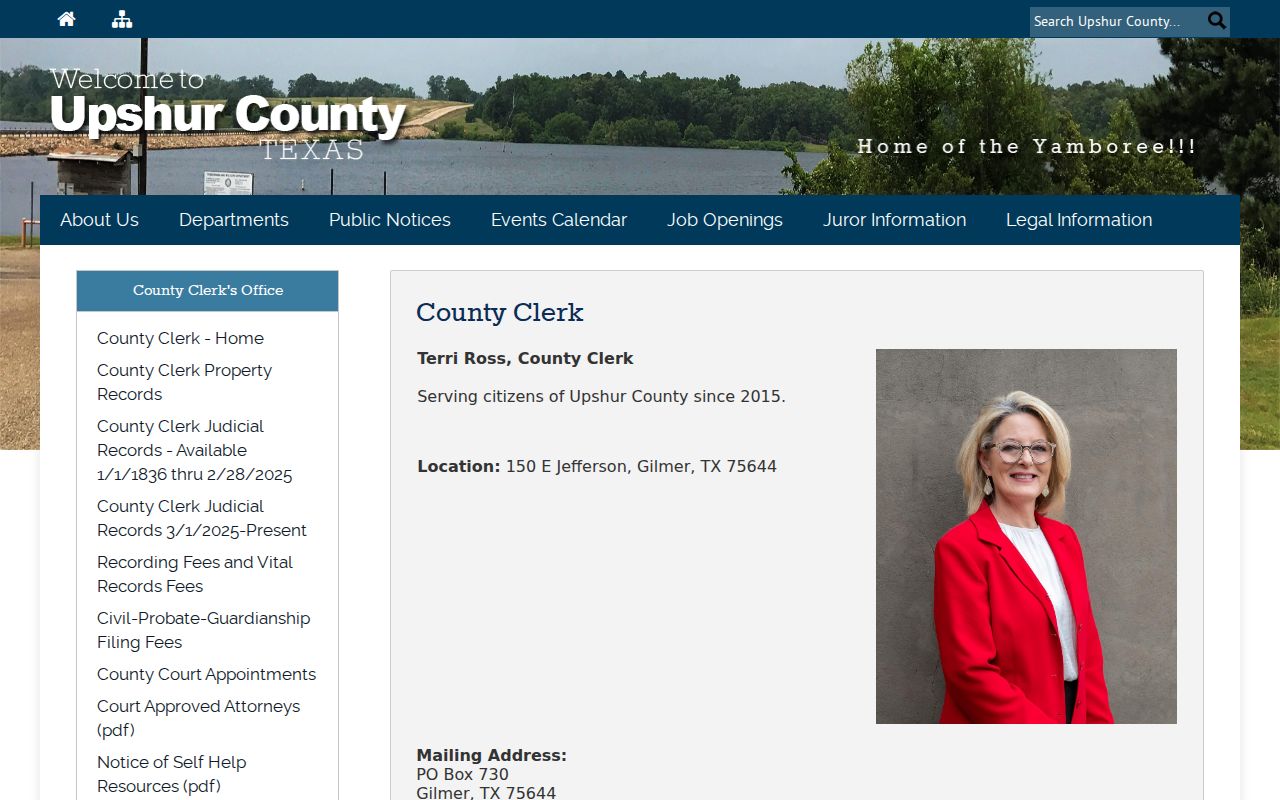
A clerk's index is not a live law-enforcement status service. Check any current Upshur County order with the office that controls it.
How Upshur County Arrest Warrants Are Served
Issuance and service are two steps. The judge or magistrate authorizes the order. A peace officer then executes it. In Upshur County, the Sheriff's Office runs patrol, investigations, jail, dispatch, prisoner-return, and bond-forfeiture functions. Constables serve criminal warrants issued through the JP courts. City police handle city law-enforcement work. The record does not show that one office serves every warrant from every court. After an arrest, booking and magistration follow the governing process, and release depends on the case and court. Upshur County posts no jail bond-window schedule, accepted payment forms, ID rule, or public walk-in surrender procedure. Do not count on a same-day bond amount or a simple counter visit. Confirm arrangements with counsel and the appropriate court.
Four Constables Serve JP Warrants Without Owning the Case
Upshur County's four constable precincts make service visible. Constables execute JP-court criminal warrants. A JP court still owns its case record. A deputy may know custody details yet cannot change the court docket. Ask the office that created the order. The Sheriff's Office is the county's official contact point for enforcement and custody routing. The county names no separate public warrant unit or searchable roster. Direct questions about agency-held information there, but the court remains the source for its signed order.
Upshur County Arrest Warrant vs Summons vs Bench Warrant
These papers do different jobs. A summons orders an appearance, an arrest warrant commands an officer to take a person into custody, and a bench warrant or capias answers a missed court duty. That distinction matters. In Upshur County, confirm the court record and the required response before anyone acts.
| Instrument | What it directs | Typical basis | Where to confirm |
|---|---|---|---|
| Arrest warrant | An officer to take the named person into custody | Judicial review under criminal procedure | Issuing court and serving agency |
| Summons | The person to appear at a stated time and place | Authorized alternative to arrest | Court listed on the document |
| Bench warrant or capias | Enforcement of a court obligation | Missed setting or other court process | Court holding the underlying case |
Upshur County Search Warrant Affidavits Follow a Different Access Rule
A search warrant works differently from an arrest warrant. It gives peace officers permission to search, not to take a person into custody. Upshur County search warrants and the affidavits behind them fall under Texas Code of Criminal Procedure Article 18.01, a separate rule from the one covering arrest warrants. Timing matters here. An affidavit may stay closed until the warrant is executed, and the rule that applies depends on what happened in that specific case.
So when you contact an office in Upshur County, name the paper you want. Say whether you need the arrest warrant, the search warrant, the affidavit, or a docket entry. A clear, narrow request to the right office gets answered faster. If the document is sealed, juvenile, or withheld under an exception, ask the clerk what part of the file can still be released to the public.
What to Do If There Is an Upshur County Arrest Warrant
Start by confirming the issuing court and the case number through a lawyer and the right clerk. From there, Upshur County options can include a voluntary surrender arranged with counsel, a bond set by the court, or a motion asking the judge to recall or quash the warrant. The best route depends on the charge. The county publishes no flat bond figure and no walk-in process that fits every case.
Important: Ask a Texas attorney to review the case and coordinate with the issuing court before surrender, bond, or any request to recall the order.
Public Access to an Upshur County Arrest Record
Getting a copy of an Upshur County arrest record means working two systems. Sheriff and agency records can be requested under the Texas Public Information Act. Court records follow judicial access rules instead, along with specific criminal-procedure statutes. Article 15.26 governs public access to arrest warrants and supporting affidavits within its own framework. Other statutes shield juvenile, sealed, and investigative material. Ask for the public portion. Redactions happen.
A records request is not a criminal-history certification, and it does not force the Sheriff to dig through another court's file. If you need current status on an Upshur County warrant, call the issuing court and ask how the docket shows service or recall. For anything personal, get legal advice rather than trusting a partial portal result.